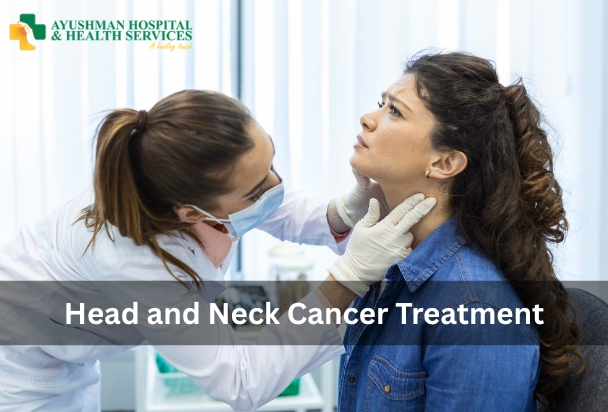
A malignant tumor located in the head or neck region is classified as head and neck cancer. There are many areas where cancer can occur, such as the throat, larynx, nose, sinuses, lips, mouth, and salivary glands, among others. Tobacco use, excessive alcohol use, and HPV (human papillomavirus) infections are significant risk factors associated with head and neck cancer. However, environmental exposures and genetic predisposition can also play a role.
It is important to treat head and neck cancer because it has the potential to spread rapidly and impact one’s ability to speak, swallow, and breathe. Choose critical head and neck cancer treatment in Dwarka, Delhi. Ayushman Hospital and Health Services offers all modern diagnostic imaging, minimally invasive surgical options, targeted therapies, and rehabilitation services for complete head and neck cancer care in Delhi.
Understanding Head and Neck Cancer
Head and neck cancer refers to cancers in the oral cavity, pharynx (throat), nasal passages, sinuses, larynx, and salivary glands. Most of these cancers affect critical human processes, such as breathing, swallowing, and speaking. It is important to diagnose these cancers early and start treatment, as they may grow quickly and spread to nearby tissues or lymph nodes.
Risk Factors and Causes of Head and Neck Cancer
- Tobacco Use – Use of cigarettes, cigars, pipes, and smokeless tobacco has been found to increase the risk of cancer.
- Alcohol Use – The excessive and chronic use of alcohol can damage the mucosal layer within the oral cavity, increasing the risk of cancer.
- Human Papillomavirus (HPV) – Certain strains of HPV are associated with cancers of the oropharynx.
- Oral Health – Untreated periodontal disease, lack of dental care, and untreated oral infections can increase the risk of cancer.
- Sun Exposure – Excessive sun exposure or sunburn can increase the risk of cancer on the lip due to ultraviolet (UV) radiation.
- Occupational Exposure – Exposure to wood dust, particulates, asbestos, and some chemicals can increase the risk of cancer.
Genetic Considerations – A positive family history of head and neck cancers can increase the risk of disease. - Immunosuppression – Immunosuppression from chronic disease may accelerate or facilitate cancer progression in a weakened immune system.
Types of Head and Neck Cance
- Cancers of the Oral Cavity: This type of cancer occurs in the lips, mouth, tongue, gums, or inner lining of the cheeks.
- Cancers of the Pharynx: This cancer forms in the pharynx, including the nasopharynx, oropharynx, or hypopharynx.
- Cancers of the Larynx: This cancer develops in the voice box, which impacts talking and breathing.
- Cancers of the Nasal Cavity: This cancer occurs inside the nose, which can affect breathing or cause obstructions.
- Cancers of the Salivary Glands: These cancers form in the salivary glands, impacting chewing or swallowing.
Symptoms of Head and Neck Cance
- A sore throat or hoarseness that has lasted for weeks and has not improved with standard treatment
- An ulcer or white patch in the mouth that is not healing and may increase in size or become painful over time.
- Difficulty swallowing either food or liquid, sometimes associated with pain or a choking sensation.
- A feeling of a lump, swelling, or mass that gradually enlarges in the neck.
- Unintentional weight loss, fatigue, loss of appetite, and general poor health.
- Recurrent nosebleeds, nasal blockage, and recurrent sinus infections without an identifiable cause.
Treatment for Head and Neck Cancer
Therapies for head and neck cancer involve strategies tailored to each case and may include surgery, radiation therapy, chemotherapy, targeted therapy, and immunotherapy, depending on the stage of the cancer.
Surgery is typically the first approach to remove the tumor and surrounding tissues and may be accompanied by reconstruction of the affected areas. Radiation therapy uses radiation, often intensity-modulated radiation therapy (IMRT), to target cancer cells and spare normal tissue. Chemotherapy is used to shrink tumors prior to surgery or in combination with radiation therapy in advanced disease. Some newer therapies, such as targeted therapies involving EGFR inhibitors and immunotherapy using immune checkpoint inhibitors, help improve treatment outcomes.
Why Choose Critical Head and Neck Cancer Care in Dwarka, Delhi?
Choosing the right treatment plan for head and neck cancers requires accurate, multidisciplinary care that combines surgery, radiotherapy, chemotherapy, and targeted therapies. Choose Ayushman Hospital and Health Services in Dwarka, Delhi, for your critical head and neck cancer treatment to get:
- Real-time imaging, IMRT, and surgical precision
- Experienced oncologists and surgeons
- Comprehensive care through surgery and therapy
- Modern treatments are designed to minimise side effects
- Customised planning for the patient and tumor
- Continuous care from diagnosis to recovery
Schedule a Visit Today at Ayushman
Book cancer care from Ayushman Hospital and Health Services. Get expert care and services for head and neck cancer. Our modern equipment, experienced care team, and patient-centered approach will provide safe, effective, and compassionate treatment.