
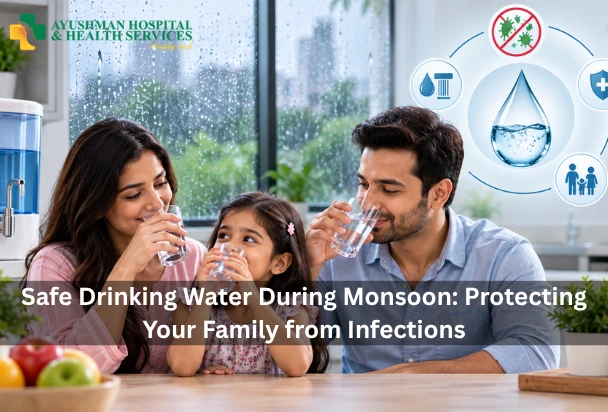
“This monsoon, make every sip count by choosing clean and safe drinking water for your family.”
Rainy days may bring relief from the heat, but they can also bring problems with drinking water. Heavy rain, overflowing drains and damaged water lines can allow germs to enter water sources. Drinking this water can cause stomach infections, loose motions, vomiting and other illnesses.
Taking a few simple steps for safe drinking water during monsoon can help keep your family healthy, especially children and older adults.
Water-Borne Diseases in Monsoon: How Can They Spread?
When it rains heavily, dirty water from drainage and sewage systems can mix with clean and consumable water sources. Therefore, if this water is not treated properly, harmful germs can reach the water we use for drinking and cooking.
Some water-borne diseases in monsoon include diarrhoea, typhoid and certain types of hepatitis. A person may develop loose stools, vomiting, stomach pain, fever, weakness or signs of dehydration.
Safe Drinking Water Tips for Your Family
Small changes at home can help reduce the risk of infection such as:
- Drink boiled, properly filtered or otherwise safe water.
- Keep drinking water in clean, covered containers.
- Wash your hands with soap before eating and before cooking.
- Don’t drink water if it looks doubtful or comes from an unclean source.
- Rinse fruits and vegetables well before eating.
- Clean bottles and containers with soap and safe water.
- Skip ice if you don’t know whether the water used to make it was clean.
- If you are travelling during the rainy season, carry drinking water from a trusted source instead of relying on unknown water supplies.
When Should You See a Doctor?
Do not ignore diarrhoea or vomiting that continues, high fever, severe stomach pain or blood in the stool. Very little urine, dizziness, dry mouth or unusual weakness can be signs of dehydration and should not be overlooked.
Children and the elderly can become dehydrated quicker. If you experience vomiting or loose stools repeatedly , you may need to seek medical attention sooner.
A family physician in Delhi can look at the patient and decide if medicines or other tests are needed. If stomach or digestive problems continue, a gastroenterologist in Dwarka may be able to help.
Getting Medical Care During the Monsoon
Sometimes an infection settles within a few days, while some illnesses need medical treatment. If symptoms are severe, continue for several days or become worse, it is better to see a doctor instead of treating yourself at home.
Ayushman Hospital and Health Services gives medical services to all the individuals who are dealing with a lot of health problems, including illnesses that may become more common during the rainy season.
If you are looking for the best hospital in Dwarka, Delhi or the best doctor in Delhi, focus on finding a healthcare team that listens to your symptoms, checks the cause and recommends treatment based on your condition. Clean drinking water, clean food and regular hand washing may seem like small things, but they can go a long way in protecting your family during the monsoon.
Ayushman Hospital and Health Services is there to support you when you need medical advice and care.
Frequently Asked Questions
- Why is safe drinking water important in the monsoon?
Contaminated water contains germs that cause diarrhoea, vomiting and other infections.
- But will boiling the water make it safe?
Boiling water can help kill many harmful germs and make it safer for drinking, if done in the correct way.
- What are common water-borne illnesses during the monsoon?
Diarrhoea, typhoid and some types of hepatitis can spread through contaminated water.
- When should I see a doctor for a stomach infection?
Book an appointment with an expert doctor at Ayushman Hospital and Health Services if you continue to vomit or your diarrhoea continues or if you have high fever, severe pain or signs of dehydration.
- How can I keep drinking water safe at home?
Store water in clean and covered containers. If you suspect that your water is contaminated, boil it before consuming it.