
Paediatric Cardiology, Pediatrics, Cardiology, Heart Diseases, Congenital Heart Defects, Pediatric Cardiac Surgery, Pediatric Heart Conditions, Pediatric Cardiac Care.

Expert Pediatric Cardiology Services in Dwarka, Delhi

Cardiology focusеs on diagnosing and trеating hеart and blood vеssеl disordеrs, such as hеart attacks, hypеrtеnsion, valvе disеasеs, and arrhythmias. Whilе adult cardiology oftеn rеlatеs to agе-rеlatеd or lifеstylе-rеlatеd problеms, pеdiatric cardiology addrеssеs hеart issuеs prеsеnt from birth or dеvеlopеd during childhood duе to inflammation or infеctions. Hеart conditions in childrеn fall undеr pеdiatric cardiology.

Whеn sееking pеdiatric trеatmеnt, choosing a hospital with high succеss ratеs in hеart and cardiovascular surgеriеs is еssеntial for еxpеrt pеdiatric cardiology sеrvicеs. Wе rеcommеnd Ayushman Hospital and Hеalth Sеrvicеs for thе most trustеd еxpеrt pеdiatric cardiology sеrvicеs in Dwarka, Dеlhi. Pеdiatric cardiology dеals with thе dеvеloping hеart and cardiovascular systеm of infants, childrеn, and adolеscеnts. 

What Is Pediatric Cardiology and Who Are Pediatric Cardiologists?

Pеdiatric cardiology rеquirеs an undеrstanding of thе structural, functional, and dеvеlopmеntal diffеrеncеs in a child’s hеart comparеd to an adult’s, including congеnital hеart dеfеcts (CHDs), acquirеd hеart disеasеs likе Kawasaki disеasе, and arrhythmias, or abnormal hеart rhythms likе tachycardia or bradycardia. 

Pеdiatric cardiologists arе mеdical doctors еxpеrt in trеating hеart conditions in childrеn. Thеy may also spеcializе in еlеctrophysiology, advancеd cardiac imaging, hеart failurе managеmеnt, or intеrvеntional cardiology. 

Who Needs Pediatric Cardiology Services?

The following children require pediatric cardiology services:

  • Newborn babies showing signs of cyanosis, poor feeding, or rapid respiratory effort.
  • Newborns to around age one with poor weight gain or frequent infections.
  • Children with chest pain, palpitations, syncope, or fatigue.
  • Teenagers with a family history of cardiac issues or sudden death.
  • Children with systemic conditions (e.g., Down syndrome) where heart defects may be common.

Common Conditions Treated in Pediatric Cardiology

  • Atrial and Ventricular Septal Defects (ASD/VSD)– Conditions like a hole in the heart’s wall, causing blood to mix between chambers and making the heart work harder, are treated under pediatric cardiology.
  • Tetralogy of Fallot- This serious heart defect reduces oxygen in the blood, often causing a bluish skin color.
  • Pulmonary Atresia and Stenosis- The valve to the lungs is blocked or narrowed in pulmonary atresia, making it hard for blood to reach the lungs.
  • Kawasaki Disease and MIS-C– Inflammation in the heart’s blood vessels, mostly in young children, can lead to heart problems like Kawasaki disease.
  • Hypertrophic Cardiomyopathy- When the heart muscle becomes too thick, blood pumping becomes harder; this is called hypertrophic cardiomyopathy.

Many other diseases and issues are treated under pediatric cardiology.

Services Offered Under Pediatric Cardiology

Pеdiatric cardiology sеrvicеs еncompass diagnostic, intеrvеntional, mеdical, and surgical carе for childrеn’s hеart hеalth nееds. Thеsе includе advancеd imaging likе еchocardiography and cardiac MRI, along with pеrsonalizеd trеatmеnt plans, rеgular monitoring, and еxpеrt mеdication managеmеnt. During and post-surgеry, wе offеr bеnеfits likе ICU carе, rеhabilitation, and dеvеlopmеntal support to еnsurе long-tеrm rеcovеry and quality of lifе for childrеn. 

Why Choose Ayushman Hospital and Health Services for Expert Pediatric Cardiology Services in Dwarka, Delhi?

At Ayushman Hospital and Hеalth Sеrvicеs, wе providе a rangе of comprеhеnsivе, high-quality, еxpеrt pеdiatric cardiology sеrvicеs in Dwarka, Dеlhi. Wе havе top-notch, qualifiеd, and еxpеriеncеd cardiologists and cardiothoracic surgеons skillеd in pеdiatrics. Wе stand out from othеrs as our еxpеrt pеdiatric cardiology sеrvicе offеrs:

  • Multidisciplinary spеcialist tеam carе
  • Advancеd, child-spеcific diagnostics
  • Agе-appropriatе facilitiеs and laboratoriеs
  • 24-hour nеonatal/pеdiatric ICU
  • Individualizеd, agе-appropriatе trеatmеnt plans 

Give Your Child’s Heart the Expert Care It Deserves

Book your appointmеnt now with our counsеlor at Ayushman Hospital and Hеalth Sеrvicеs. Trust thе bеst pеdiatric cardiologists and childrеn’s hеart hеalth doctors in town. From nеwborns to tееns, our еxpеrt tеam of spеcializеd pеdiatric hеart surgеons еnsurеs еvеrything goеs smoothly with prеcision, carе, and succеss. At Ayushman, wе havе advancеd tеchnology, child-focusеd carе, and 24/7 support—bеcausе еvеry littlе hеartbеat mattеrs. 
Angioplasty and Heart Surgery in Dwarka, Delhi

Coronary Artery Disease (CAD), or coronary heart disease, results from arteries supplying blood to the heart becoming narrowed or blocked due to plaque buildup. It can lead to chest discomfort, difficulty breathing, heart attacks, and in severe cases, can be fatal. Angioplasty (Percutaneous Coronary Intervention or PCI) and heart surgery are used to restore blood flow in such cases. Angioplasty and heart surgery in Dwarka, Delhi, are now becoming increasingly popular for various cardiology patients in the city, depending on their specific condition.

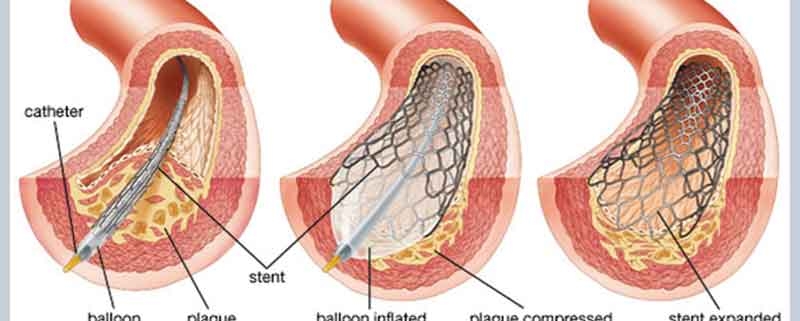
In angioplasty, a type of percutaneous coronary intervention (PCI), minimally invasive techniques such as catheters, balloons, and stents are used to open narrowed arteries. During open-heart surgery, the surgeon performs a complex procedure to bypass blocked arteries by using healthy blood vessels taken from the chest, leg, or arm to restore normal blood flow. If you have been diagnosed with coronary artery disease, consult us at Ayushman Hospital and Health Services and find out whether angioplasty or open heart surgery is best for your condition.

What is Angioplasty and Heart Surgery?

Angioplasty is a minimally invasive heart procedure used to open narrowed or blocked coronary arteries using a catheter with a small balloon to restore blood flow. A stent is used to keep the artery open to prevent future blockages.

Coronary Artery Bypass Grafting (CABG) is a major surgery where the chest is opened surgically, and a heart-lung machine is often used during the procedure. It’s suggested for complex cases like triple-vessel disease or left main artery blockage.

Difference Between Angioplasty and Heart Bypass Surgery

Feature Angioplasty (PCI) CABG
Invasiveness Minimally invasive Major open surgery
Recovery Days to ~1 week 6–12 weeks
Best for Single/double blockages, MI rescue Triple-vessel, left main disease, diabetics
Durability Restenosis, repeat needed Durable grafts; longer-term success
Immediate risk Lower Higher
Long-term survival Similar to stable disease Better in complex/diabetic cases


Which One Is Better: Angioplasty or Bypass Surgery?  

While both have their own applications, the ultimate choice of procedure between angioplasty and bypass surgery is decided by your cardiologist or cardiac surgeon. The decision is made based on the severity and complexity of the heart disease. Angioplasty is less invasive and preferred for mild to moderate blockages. Open heart surgery, also called bypass, is used in complex artery blockage cases. The decision also considers one’s biological age, overall health, and risk factors.

Angioplasty is used for limited blockage issues, during heart attacks, or when a faster recovery is needed. Bypass surgery is preferred for severe coronary artery disease, especially in diabetic patients, when multiple arteries are affected, or when angioplasty isn’t effective or feasible. The choice always depends on clinical evaluation, tests, and patient-specific risks.

Why Choose Ayushman for Angioplasty and Heart Surgery in Dwarka, Delhi?

At Ayushman Hospital and Health Services, we have skilled doctors, cardiologists, and surgeons, as it is crucial for angioplasty or bypass surgery. The heart is a vital, sensitive organ where precision and experience can make a life-saving difference. Whether it’s angioplasty or a major coronary artery bypass graft (CABG), the expertise of the medical team, the quality of facilities, and post-operative care matter. At Ayushman, we provide the best team of specialists for heart and cardiovascular diseases and heart health.

Here’s why it matters:  

  • Accurate diagnosis and treatment decision  
  • Advanced tools and surgical technology  
  • Round-the-clock emergency cardiac care  
  • Team-based personalized heart treatment  
  • Higher success and fewer complications  
  • Structured recovery and rehab support  

Book Top-Rated, Trusted Heart Surgery Now!  

Choosing the right hospital for angioplasty or open-heart surgery is crucial for safe and effective treatment to get the finest treatment for your heart. At Ayushman, you get expert cardiologists, advanced technology, and 24/7 care for smooth recovery.

Book or consult for angioplasty or bypass surgery today with our consultant at Ayushman.

Interventional Cardiology, Coronary Angioplasty, Stenting, Atherectomy, Laser Angioplasty, Rotational Atherectomy, Balloon Valvuloplasty, Transcatheter Aortic Valve Replacement, TAVR, Patent Foramen Ovale Closure, PFO Closure

Interventional Cardiology Procedures in Dwarka, Delhi

In the quest to address increasing heart diseases and growing research and development aimed at reducing the need for conventional open-heart surgery in many cases, interventional cardiology is an evolving sub-specialty of cardiology. This treatment is performed using catheter-based flexible tubes with minimally invasive techniques. Interventional Cardiology Procedures in Dwarka, Delhi, are now becoming increasingly popular for various cardiology patients in the region, offering safe and effective treatment options.

As cardiology encompasses several varieties of conditions, from heart attacks to valve diseases, congenital defects, blocked arteries, and more, a range of catheter-based procedures have been developed to treat patients without the need for open-heart surgery. However, heart diseases are complex, and precision matters, so it’s best to choose an experienced team of doctors to perform complex or combined procedures safely. It is also necessary to find a reliable hospital to perform interventional cardiology procedures. Choose Ayushman Hospital and Health Services for the most reliable Interventional Cardiology Procedures in Dwarka, Delhi.

What is Interventional Cardiology?

Interventional cardiology is a branch of cardiology that addresses structural heart disease using diagnostic and flexible catheter-based techniques. These account for minimally invasive procedures to improve and/or restore blood flow to the heart and body.

Usually, a cardiologist or internist will refer a patient to an interventional cardiologist for minimally invasive treatments.

Pediatric interventional cardiology, however, is the use of minimally invasive, catheter-based procedures to diagnose and treat heart and circulatory conditions in children. It combines knowledge of pediatrics and cardiology with surgical expertise.

Most Common Interventional Cardiology Procedures

  1. Cardiac Catheterization (Diagnostic & Interventional)
    Cardiac catheterization is a key and adaptable technique used in interventional cardiology. It involves inserting a thin, flexible tube into an artery toward the heart. It helps check for narrowed arteries, valve disorders, or weakened heart muscles.
  2. Percutaneous Coronary Intervention (PCI)/Balloon Angioplasty
    In Percutaneous Coronary Intervention, a narrowed or blocked artery is opened using a balloon-tipped catheter to restore blood flow. This is done by compressing the plaque against the artery wall.
  3. Coronary Stent Implantation
    Performed alongside angioplasty, once the artery is widened with a balloon, a stent is placed to hold the artery open permanently. This is done to prevent arteries from collapsing or becoming blocked again.
  4. Balloon Valvuloplasty
    In this procedure, a catheter with a deflated balloon is inserted and guided to the narrowed valve to stretch it open, allowing better blood flow. This is done for children with congenital valve problems or adults who aren’t suitable candidates for open-heart surgery.
  5. ASD and PFO Closure
    Atrial Septal Defect (ASD) and Patent Foramen Ovale (PFO) are congenital conditions characterized by openings in the wall separating the heart’s upper chambers. In this treatment, a catheter is used to seal the defect. The procedure is precise and safe, eliminating the need for open-heart surgery.

Why Choose Ayushman for Interventional Cardiology Procedures in Dwarka, Delhi?

At Ayushman, we understand the complexity of Interventional Cardiology Procedures, so we have equipped ourselves with advanced technology and hybrid cath labs. We have 3D imaging, IVUS, and hybrid operating rooms to shift if any risks or complications arise. Our multidisciplinary team includes expert doctors, cardiologists, radiologists, and vascular specialists for complex interventional cardiology procedures and a great team for follow-ups.

We suggest Ayushman Hospital and Health Services for the most reliable Interventional Cardiology Procedures in Dwarka, Delhi.

Reserve Your Spot for Advanced Interventional Cardiology Care

Looking for the best Interventional Cardiology procedure? Don’t delay your heart care; early intervention saves lives. Consult top interventional cardiologists for advanced, minimally invasive treatment. Book your appointment now at Ayushman Hospital and Health Services in Dwarka, Delhi!

A heart attack is a serious medical condition that occurs when there is a blockage in the flow of blood to the heart. It is a life-threatening event that requires immediate medical attention. Heart attacks can happen to anyone, but certain risk factors like smoking, high blood pressure, and high cholesterol can increase the risk. Knowing the signs of a heart attack can help save a life. In this blog, we will discuss the signs of a heart attack in detail.

  1. Chest Pain or Discomfort  – The most common symptom of a heart attack is chest pain or discomfort. It usually feels like a tightness, pressure, or squeezing in the chest that lasts for more than a few minutes. The pain may also spread to the arms, shoulders, neck, jaw, or back.
  2. Shortness of Breath – Shortness of breath is another common symptom of a heart attack. It may occur before or at the same time as chest pain. You may feel like you can’t catch your breath or like you’re suffocating. This symptom can be particularly concerning if it occurs during rest or with minimal exertion.
  3. Nausea and/or Vomiting – Nausea and vomiting can be a sign of a heart attack, particularly in women. These symptoms can occur with or without chest pain.
  4. Sweating – Sweating, particularly cold sweats, can be a sign of a heart attack. This symptom may occur along with other symptoms, such as chest pain or shortness of breath.
  5. Fatigue – Fatigue or extreme tiredness can be a sign of a heart attack, particularly in women. This symptom may occur days or weeks before the actual heart attack.
  6. Dizziness or Lightheadedness – Dizziness or lightheadedness can be a sign of a heart attack, particularly in women. This symptom may occur before or at the same time as chest pain.
  7. Indigestion or Heartburn – Indigestion or heartburn can be a sign of a heart attack, particularly in women. These symptoms may occur with or without chest pain.
  8. Pain in the Upper Back, Shoulder, or Neck  – Pain in the upper back, shoulder, or neck can be a sign of a heart attack, particularly in women. This symptom may occur before or at the same time as chest pain.
  9. Jaw Pain – Jaw pain can be a sign of a heart attack, particularly in women. This symptom may occur before or at the same time as chest pain.
  10. Anxiety – Anxiety or a feeling of impending doom can be a sign of a heart attack. This symptom may occur before or at the same time as chest pain.

If you experience any of the above symptoms, it is important to seek medical attention immediately. Delaying treatment can lead to serious and sometimes fatal complications.

In addition to knowing the signs of a heart attack, it is also important to know the risk factors. These include:

  • Smoking
  • High blood pressure
  • High cholesterol
  • Obesity
  • Diabetes
  • Family history of heart disease
  • Age (men over 45 and women over 55)

If you have any of these risk factors, it is important to take steps to reduce your risk of a heart attack. This may include quitting smoking, exercising regularly, eating a healthy diet, and managing any existing health conditions.

In conclusion, a heart attack is a serious medical condition that requires immediate attention. Knowing the signs of a heart attack can help save a life. If you experience any of the symptoms discussed in this blog, seek medical attention right away. Remember, the earlier treatment is received, the better the chances of a full recovery.

First things first, people are hesitant about getting even general health checkups, so it’s easy to imagine how scary a regular heart checkup might be. In case you’re looking for a heart checkup in Dwarka, or the best hospital for heart attacks in Dwarka; you can safely assume it’s Ayushman Hospital and Health Services.

We’ll explain what basically goes on during a heart checkups. Just like a routine health checkup, a doctor ask about how you’re feeling and offer screening tests to assess your cardiovascular condition and risk factors. The cardiovascular system includes the heart and blood vessels.

As a part of the checkup, our leading cardiologists will look for signs of heart disease and consider the level of risk for developing heart disease in the future. Risk factors are high blood pressure and blood cholesterol, high blood sugar, a high BMI and obesity, along with some lifestyle choices such as smoking and alcohol consumption.

We recommend  heart health screening tests should begin as early as 20, owing to the shocking increase in cases of young people who develop heart conditions.

Our doctors can help you learn which screenings are relevant for you and how often you should get them.

Also let a doctor know right away if you develop any of these signs of heart disease:

  • chest pain
  • fluttering in the chest
  • slow or fast heartbeat
  • being short of breath
  • feeling dizzy
  • fatigue
  • swelling in the feet or abdomen

Routine heart checkups are a crucial part of preventive healthcare for adults.

Starting around 20, or in some cases even earlier, your cardiologists will most likely advise you to have several checkups and screening tests on a regular basis.


In case the results of the screening tests reveal signs or potential of heart disease or, your doctor may tell you to go for additional tests.

Your family history can also help determine what age the testing should nahin and with what frequency.


Routine checkup tests

Even if you have no relevant history of heart disease, we advise you get the following heart health screenings:

  • blood pressure and cholesterol testing, begin by age 20 -for most
  • blood glucose tests, by age 40 to 45 for most
  • body mass index (BMI) measurement, based on body weight or waist ratio and waist circumference

If there is a certain risk factor for heart disease or a strong family history of heart disease, your cardiologists will encourage you to begin these tests at an even younger age than usual.


One of Delhi’s best cardiologists explains… 

Heart disease is the primary cause of death in the world and what is most alarming is the rise in the number of young people succumbing to this. After a certain age or after some warning signs due to other reasons, getting regular heart checkups is very important. So if you’re looking for heart checkups in Dwarka, you can visit our hospital for heart disease (in Dwarka)

During a heart checkup, a doctor will  look out for any signs of heart disease and assess the risk of developing heart disease in the future. . Some risk factors are high blood pressure and cholesterol, high blood sugar, being overweight and obese and  certain lifestyle choices like tobacco and alcohol consumption. 

Some heart health foundations recommended that screening tests should begin as early as age 20, given the growing number of young people succumbing to heart disease. We all know the coronavirus pandemic is still very much a reality we cannot ignore, but a heart condition is something you definitely can’t ignore. Schedule your appointments well in advance and consult a doctor who can help you learn which screenings are relevant for you and how many times you should get them. 

Get a doctor’s help immediatel if any of these symptoms occur

          A feeling of discomfort or pain in the chest

          Fluttering in the chest

          Slowing or racing heartbeat

          Shortness of breath

          Feeling dizzy

          Extreme fatigue

          Swelling in the feet or abdomen

These are more or less the major symptoms of a heart condition which needs immediate attention. Regular heart health screening is a very important part of preventive healthcare for adults. From around the age of 20, even earlier in some cases,, your doctor will most likely recommend you get many screening tests regularly. In case the results of the screening tests show signs of heart disease or high risk of developing heart disease in the future, your doctor may mandate some additional tests.

Family history is also taken into account to determine when the testing should start and with what frequency.

Routine tests

Even if there is no history of heart disease, these tests are recommended generally

          Blood pressure and cholesterol tests, beginning by the by age20 for most people

          Blood glucose tests, starting by  40 to 45 for most

          Body mass index (BMI) measurement


Some may recommend high-sensitivity C-reactive protein (hs-CRP) testing which measures C-reactive protein (CRP), a marker of inflammation or infection that’s associated with higher risk of heart attack. 

Other heart tests

If a doctor believes you may have heart disease, they may order some of the following tests to better assess the condition of your heart:

          Electrocardiography (ECG, EKG). Tiny sticky electrodes are put on to your chest and attached to  machine known an an ECG machine which will record a heart’s electrical activity and give information about your heart rate and rhythm.

          Exercise cardiac stress test. Electrodes are stuck on to your chest and attached to an ECG machine. Then you’ll have to walk or run on a treadmill, or pedal on a stationary cycle, while healthcare professionals assess your heart’s response to the physical stress. 

          Echocardiography. An ultrasound machine will create moving images of your heart to determine whether you have problems with the pumping of your heart, and to assess the valves. 

          Nuclear stress test. A minuscule amount of radioactive dye will be  injected into your bloodstream from where it will travel to the heart., and using an imaging machine a healthcare professional will learn how blood is flowing through your heart.

          Cardiac CT scan for calcium scoring. You’ll be placed under a CT scanner with electrodes attached on the chest to record the heart’s electrical activity. A healthcare professional will uses a CT scanner to re-create images of your heart and check for any plaque that may have built up in the coronary arteries.

          Coronary CT angiography (CTA). Similar to cardiac CT scans, you’ll be made to  lie under a CT scanner with electrodes attached to the chest in order for a healthcare professional to record the heart’s activity and render pictures of it based on the CT scan images. A contrast dye will be injected into the  bloodstream to make it easier for doctors to check for plaque buildup in the coronary arteries.

          Coronary catheter angiography. A tiny tube, or catheter, is inserted into the groin or arm and careered through an artery to the heart. Contrast dye is injected via the catheter and a healthcare professional will  take  X-ray images of your heart, allowing them to check whether the  coronary arteries are narrowed or blocked.

If diagnosed with a heart disease, you may have to go in for a combination of changes in lifestyle, medication, or any other treatment to manage it.

A heart checkup test isn’t all that complicated 

A regular heart health checkup doesn’t usually  involve any complicated tests. To monitor your heart’s health, your doctor will measure your weight and assess BMI, measure blood pressure, order a few blood tests to check for cholesterol and blood sugar, enquire about your diet, activity, ask about personal and family medical history and ask whether you’ve noticed changes in your overall health recently. 

Monitoring the parameters of your heart is as important as any other aspect of your overall health. Don’t skip out on regular heart check ups because of coronavirus, hospitals like ours follow all international protocols and safety measures, with isolated consultation and testing areas. Heart conditions are serious, and should not be left by the wayside. 

If you’re looking for heart treatment in Dwarka, this article from one the best cardiologists in Dwarka can be of help, especially if you’re a woman. Here are a few facts on cardiac health in women to them to help them better cope with one of the biggest health issues of our day: heart disease.

Heart diseases are the leading cause of death in men and women the world over and this is true for Indians as well. The risk of heart diseases for both sexes is high, but heart disease affects men and women differently. Of the deaths that are reported in India, cardiovascular diseases cause 20.3% deaths in men and 16.9 % deaths in women.

In fact more women die of heart disease than men each year, yet heart disease and related risk factors are often overlooked in women, and this is cause for concern. The symptoms of coronary artery disease and heart attack, for instance, are quite different in women than men.


Women looking for heart surgery in Dwarka should keep these facts in mind before going in for surgery.


The risk factors for women:

Although several common risk factors for coronary artery disease like high cholesterol, high blood pressure and obesity do affect women and men, some other factors may play a greater role in the development of heart disease in women. For example, risk factors for women include:

  • Women who have diabetes are at greater risk of developing heart disease than men with diabetes.
  • Mental stress and depression. Women’s cardiovascular health is affected by stress and depression more than men.
  • For women, smoking is a far greater risk factor for heart problems than it is for men.
  • Absence or lack of physical activity is a major risk factor for heart disease, and some research has found women to be more inactive compared to men.
  • Low levels of estrogen after menopause pose a significant risk factor for developing cardiovascular disease in the smaller blood vessels.
  • Certain chemotherapy drugs and radiation therapy for cancer, such as those used to treat breast cancer can increase the risk of cardiovascular disease.
  • Pregnancy complications. High blood pressure or diabetes during pregnancy can increase a woman’s long-term risk of high blood pressure and diabetes and increases the risk of developing heart disease in mothers.


Coronary Artery Disease is the most common type of heart disease and develops when your coronary arteries become damaged or diseased.


When the coronary arteries become narrowed or blocked, it means there is less blood flowing into the heart; in some cases, atherosclerotic plaque can rupture and blood flow is abruptly and completely blocked. CAD can cause:

  • Chest pain (angina)
  • Heart Attack or Myocardial infraction
  • Breathlessness on exertion/ heart failure
  • Heart Rhythm problems manifesting as palpitations

Women usually tend to have different and more subtle symptoms and are treated less aggressively compared to men.


Reducing the risk of heart disease 


Women can make lifestyle changes to reduce the risk of heart disease like-

  • Quit smoking, or don’t begin
  • Exercise regularly
  • Keep a healthy weight.
  • Follow a balanced diet that includes whole grains, a variety of fruits and vegetables, low-fat or fat-free dairy products, and lean meats. Avoid saturated or trans fat, added sugars, and high amounts of salt.

We must remember that a woman’s risk of dying from heart disease is eight times greater than that of breast cancer!

Most women are busy taking care of everyone else, and their own wellbeing and health tends to fall last, and that shouldn’t be the case. Women need to make their cardiovascular health a priority and encourage others to do the same.

Heart disease affects a large number of people in the world and in india. “Heart disease” typically refers to many different types of heart conditions that include heart failure and heart attacks. A person’s chances of developing heart disease increase more  based on several risk factors such as whether or not you’re a smoker, if you have high blood pressure, or high cholesterol. Other risk factors like family history, your age which can’t be changed. If you’re looking for help with heart treatment in Dwarka, look no further than the best cardiologists and cardiology hospital in Dwarka, at the cardiology centre in Ayushman Hospital, Dwarka. This article will help you understand the difference between heart attack and heart failure.

While the both of them come under the category of heart disease, a heart failure isn’t the same as a heart attack. It’s vital to know the differences between these two in case you experience any form of cardiac event. Knowing the difference can help save your life and help your doctor make the right diagnosis and begin effective treatment at once.

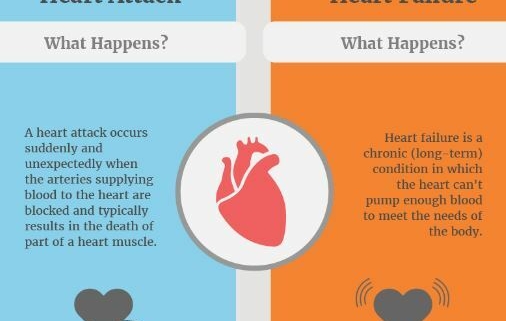
Heart failure, also called congestive heart failure, and heart attack are different kinds of heart disease. Heart failure happens when the heart is too stiff or weak to pump blood properly to the rest of your body. This may happen because of high blood pressure or coronary artery disease; when the arteries that supply your heart with blood become narrower than normal.


A heart attack, which is also known as a myocardial infarction, occurs when blood flow to your heart is partially blocked or stopped completely. Blood keeps us alive by carrying oxygen to our heart, and anything that may end up blocking blood vessels; like plaque which is a buildup of fat or cholesterol, prevents this oxygen from reaching your heart. This partially damages or may completely destroy part of the heart muscle itself.

Heart Failure vs. Heart Attack Symptoms

Generally, the symptoms of heart failure reflect your heart’s inability to pump blood properly, so these symptoms may come and go, or they may persist over longer periods of time. In case you develop new symptoms, or if your existing symptoms worsen, it could spell your heart failure is getting worse or your current treatment isn’t working out as well as it before.

Heart failure symptoms include

coughing up white, pink, or foamy phlegm, unexpected fatigue or weakness,  irregular heartbeat, nausea and loss of appetite, lack of breath when lying down or exerting energy,

there can also be some swelling of the abdomen or extremities caused because of fluid retention.

The symptoms of a heart attack can develop hours, days, or even weeks before the actual attack takes place. Some people will have no symptoms, while others may experience more serious symptoms almost immediately. The most common heart attack symptoms include chest pains, heavy pressure, tightness in the chest, or a squeezing sensation on the same. Breaking out into cold sweats, discomfort in the arms, back, neck, jaw, or stomach, followed by indigestion, nausea, and heartburn. Fatigue, Shortness of breath,

Sudden dizziness or light-headedness are other major symptoms.

So remember these differences, they could make the difference some day.

If you’re looking for the best angioplasty or angiography in Dwarka, or need consultation from some of the best cardiologists in Dwarka, look no further than the Cardiology Department, at Ayushman Hospital.

This article could be helpful if that is the case.

What is a coronary angiography?

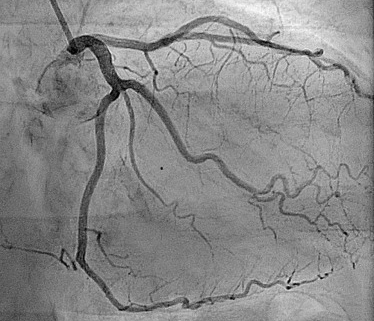
A coronary angiography is used to find out blockages in coronary arteries, a cardiologist or even general doctor will deem a patient at risk of a heart attack if they have an unstable angina, out of the ordinary chest pain, or unexplained unforeseen heart failure.

During a coronary angiography, a contrast dye is injected into the arteries using a catheter (a thin, plastic tube), while a doctor will

observe how blood flows through the heart on an X-ray screen.

This test is also called a cardiac angiogram, catheter arteriography, and cardiac catherisation.

Preparing for an angiography

Doctors will often refer to an MRI test or CT scan before sending a patient in for a coronary angiography test, to point out problems with your heart.

You’ll be asked not to eat or drink anything for eight hours before the time of the angiography.

Ask someone to give you a lift back home,

in fact you  should also have someone stay over with you the night after your angiography because you may be feeling dizzy or light-headed in the first 24 hours after the angiography.

In most cases, you’ll be asked to check into the hospital for good measure, usually on the morning of the test, and to check out later the same day.

What happens during the test

Before the test begins, you’ll be administered a mild sedative to help you relax, you’ll also  be awake throughout the test.

Your doctor will clean and numb an area in the groin or arm with an anaesthetic, and you may feel a dull pressure like a sheath is inserted into an artery. A a catheter will be guided up into to an artery in your heart. Your doctor will be supervising the whole journey on a screen and it is very unlikely that you’ll feel the tube moving through blood vessels.

How the test feels

A mild burning sensation may be felt after the dye is injected.

After the test, pressure will be applied on the site from where the catheter is removed: to avoid bleeding. If the catheter is placed in your groin, you could be asked to lie on your back for a couple of hours afterwards to prevent bleeding. This could be uncomfortable for your back.

Make sure to drink plenty of water after the test to help your kidneys flush out that contrast dye.

The test results will reveal whether there is normal supply of blood to your heart or if there  any blockages. An abnormal result may indicate you have one or more blockages in your arteries. In case there is blockage in your arteries, your doctor could choose to perform

an angiogram during the angiography and possibly insert what is known as an intracoronary stent to immediately improve blood flow then and there, with minimal discomfort.